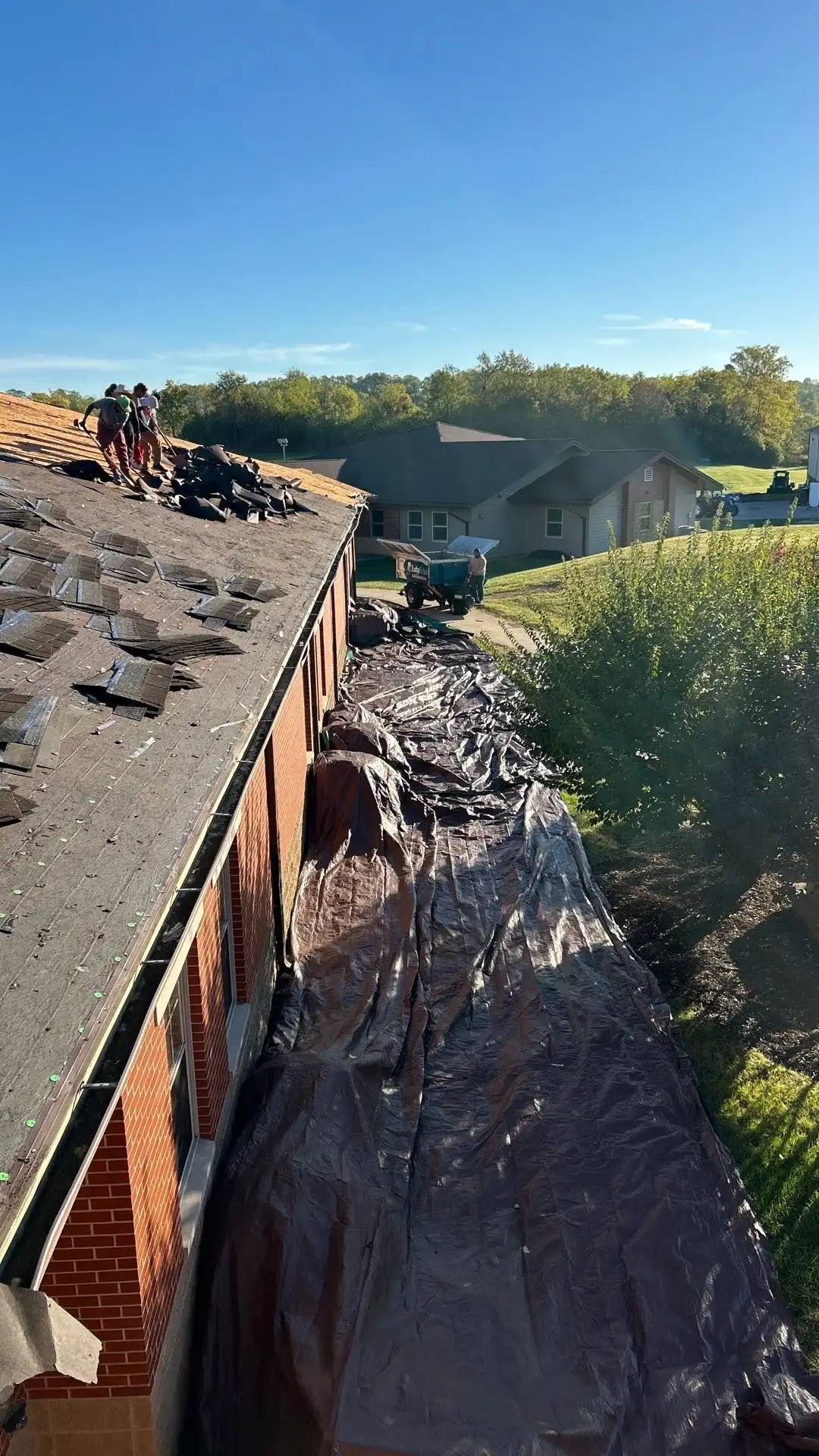
Reroofing: how it works and its tradeoffs
Reroofing can be an appealing option in the right circumstances, and for a Corydon owner, understanding its pros and cons clarifies when it makes sense. It installs over the existing roof, which brings both advantages and limitations.
The advantages of reroofing
Reroofing's main advantages are lower cost and less disruption, since avoiding the removal and disposal of the old roof saves on labor and disposal expense and reduces the mess and time of the project. It is the more economical, less disruptive option. For a roof, reroofing can cost meaningfully less than a tear off and proceed faster with less disturbance to the building's operations, which makes it attractive when the existing roof's condition and code allow it as a suitable approach.
The limitations of reroofing
Reroofing's limitations are significant: it requires the existing roof to be in suitable condition, since the new roof rests on the old, it does not address problems hidden beneath the old roof like wet insulation, and codes limit the number of roof layers, often to two. These constraints narrow when it applies. For a Harrison County roof, reroofing is not appropriate if the existing roof has wet insulation, deck problems, or already has the maximum layers, since it would build over hidden problems or violate code, making the existing condition decisive.
When reroofing is appropriate
Reroofing is appropriate when the existing roof is in suitable condition, dry and sound beneath, without hidden moisture or deck problems, and when codes allow another layer, typically meaning the roof does not already have the maximum number. These conditions must be met. For a roof, reroofing suits a roof that is worn but sound beneath, with the layer count allowing it, where the cost and disruption savings can be captured without building over hidden problems, which is the situation where it is the sensible choice.
Confirming reroofing is suitable
Confirming reroofing is suitable requires inspection, including checking for hidden moisture with core samples or scanning and verifying the layer count against code, since these determine whether it can be done properly. The assessment is essential. For a Corydon roof, an inspection that confirms the existing roof is dry and sound beneath and that code allows another layer is necessary before reroofing, ensuring the approach is appropriate rather than building over problems, which is why the existing roof's condition must be verified.
Reroofing in summary
Reroofing offers lower cost and less disruption by building over the existing roof, but it requires the existing roof to be sound beneath, does not address hidden problems, and is limited by code layer counts. For a Harrison County owner, this profile shows when reroofing fits, on a sound beneath roof with the layer count allowing it, which the comparison with tear off helps clarify against the more thorough alternative.
Find out if reroofing suits your roof
It also helps to remember that code constraints can decide the matter regardless of what an owner would prefer, because a roof already at the maximum layers must be torn off no matter how sound it is. A Harrison County owner who confirms the layer count and code requirements up front avoids planning around an option that is not actually available. Between the existing condition and the code limits, the choice is often narrowed before cost even enters, which is why verifying both early is the practical starting point for the decision.
The broader point about reroofing versus a tear off is that the existing roof's condition usually drives the decision more than cost preference, since building over a roof with hidden moisture simply traps the problem beneath a new roof. A Corydon owner who lets a thorough inspection, including core samples, establish what is actually beneath the roof gets the right answer, whether that captures reroofing's savings or requires a tear off's thoroughness. The condition is the fact that matters, and discovering it before choosing is what prevents an expensive mistake.
Finally, where both options are genuinely available, the choice comes down to weighing reroofing's real savings against a tear off's more reliable long term result, in light of how long the building will be held. A owner planning to keep the building for decades may favor the fresh foundation of a tear off, while one capturing savings on a sound roof may reasonably reroof. That tradeoff, grounded in the roof's condition and the owner's horizon, is the heart of the decision once condition and code allow both paths.
It also helps to remember that code constraints can decide the matter regardless of what an owner would prefer, because a roof already at the maximum layers must be torn off no matter how sound it is. A Harrison County owner who confirms the layer count and code requirements up front avoids planning around an option that is not actually available. Between the existing condition and the code limits, the choice is often narrowed before cost even enters, which is why verifying both early is the practical starting point for the decision.
The broader point about reroofing versus a tear off is that the existing roof's condition usually drives the decision more than cost preference, since building over a roof with hidden moisture simply traps the problem beneath a new roof. A Corydon owner who lets a thorough inspection, including core samples, establish what is actually beneath the roof gets the right answer, whether that captures reroofing's savings or requires a tear off's thoroughness. The condition is the fact that matters, and discovering it before choosing is what prevents an expensive mistake.
Finally, where both options are genuinely available, the choice comes down to weighing reroofing's real savings against a tear off's more reliable long term result, in light of how long the building will be held. A owner planning to keep the building for decades may favor the fresh foundation of a tear off, while one capturing savings on a sound roof may reasonably reroof. That tradeoff, grounded in the roof's condition and the owner's horizon, is the heart of the decision once condition and code allow both paths.
It also helps to remember that code constraints can decide the matter regardless of what an owner would prefer, because a roof already at the maximum layers must be torn off no matter how sound it is. A Harrison County owner who confirms the layer count and code requirements up front avoids planning around an option that is not actually available. Between the existing condition and the code limits, the choice is often narrowed before cost even enters, which is why verifying both early is the practical starting point for the decision.
Corydon Commercial Roofing inspects Corydon commercial roofs to confirm whether reroofing is suitable, checking condition and code. Call (765) 676-3491 to find out whether reroofing is right for your roof. Confirming the right approach is what separates a smart investment from an expensive guess.